
About me
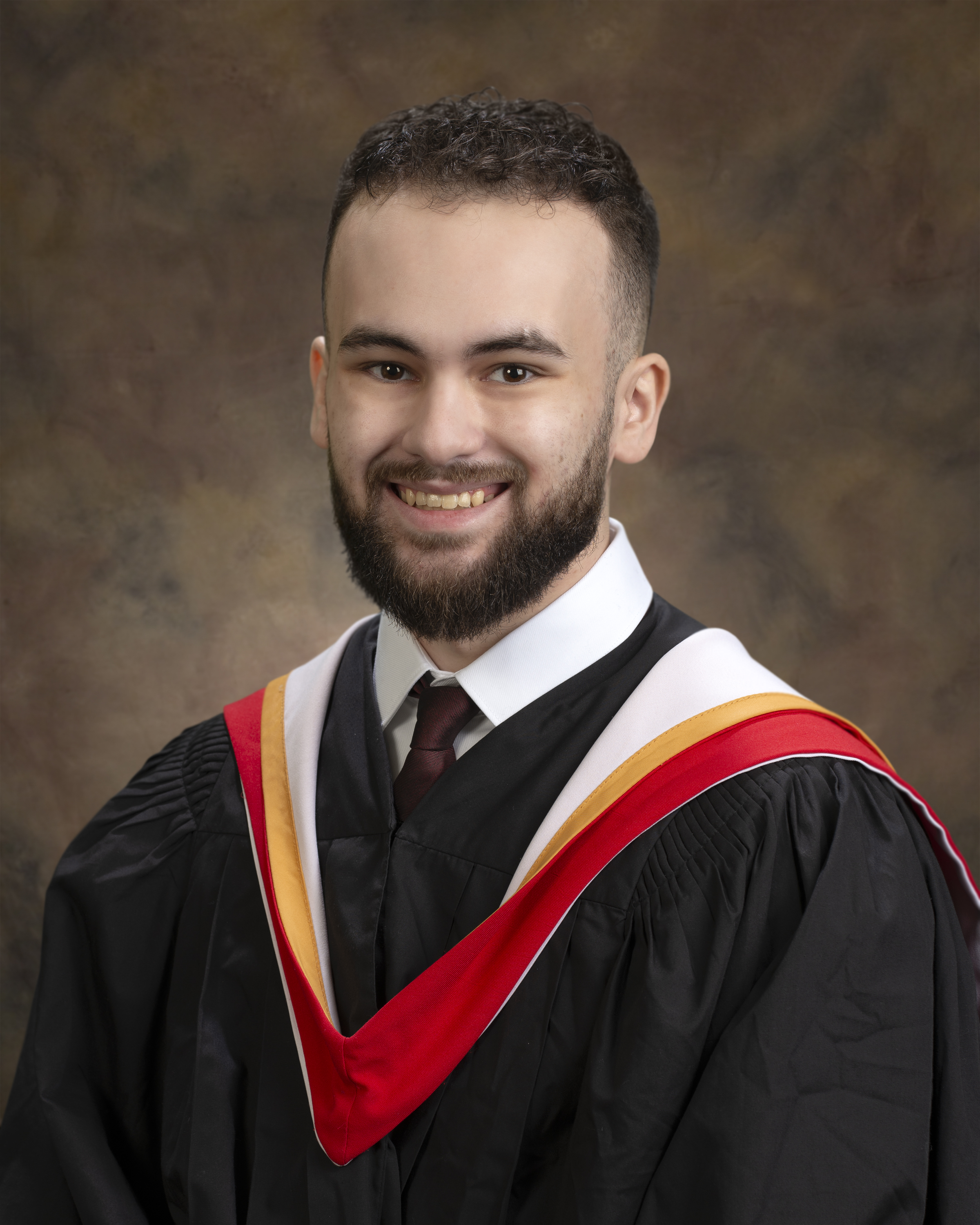
I’m a graduate student in the Quantitative Methods program at York University, Toronto, Canada. My research thus far has focused on R package development, the (mis)use of statistical methods, and reproducibility. I am also interested in statistical programming more broadly, with a focus on R and Python. When I’m not in the lab, I am usually playing guitar or spending time with my dog, Ringo.
Highlights of my work
- 📦 First author and maintainer of R package ggfourfold.
- Implemented fourfold displays for visualizing 2 × 2 contingency tables in ‘ggplot2’.
- Worked with Professor Michael Friendly to extend the display beyond its classic form with options for square cells instead of quarter-circles and an accessible palette for those with colour vision deficiencies.
- Co-authored vignette: Fourfold Displays for ‘ggplot2’.
- 📦 Second author of Professor Friendly’s R package vcdExtra.
- Built the beginnings of a ‘tidy’ framework for working with categorical data in R.
- Authored vignette: Steps Toward Tidy Categorical Data Analysis.
- 📦 Second author of R package ggmosaic2.
- Worked with Professor Friendly to bring mosaic plots back to CRAN within the ‘ggplot2’ framework following the removal of the legacy package, ‘ggmosaic’.
- Developed and assisted with substantial improvements and additions, including residual-based shading, proper faceting and spacing, along with a more intuitive API to allow non-aesthetic parameters to be shared between ‘ggplot2’ layers.
- Authored vignette: Introducing ggmosaic2.
- 🏆 First prize (Bachelor’s) oral presentation at the Canadian Statistics Student Conference run by the Statistical Society of Canada.
- My presentation was on the work I did for my undergraduate thesis, which was an investigation into the validity of methods to detect questionable research practices (e.g., p-hacking) in large sets of results.
📖 Reviewing and editing Professor Friendly’s in-progress textbook Visualizing Multivariate Data and Models in R.
- 🐍 Led the creation of an introductory workshop for data analysis in Python.
- This was delivered through the Quantitative Methods Workshop Series run by the Department of Psychology and Statistical Consulting Service at York University.
- To be delivered again in November, 2026.
